



2026.09.14
Tomonoura's Joyato Lantern & Gangi Steps | Edo-Period History Remaining in the Tide-Waiting Port
Tomonoura Historical Chronicles
Tomonoura Historical Chronicles Vol. 9
Tomonoura, which flourished as a port for waiting out tides, preserves countless stories of people who visited, departed from, and dearly cherished this town.
"Tomonoura Historical Chronicles" is a 12-part series introducing notable historical figures and events connected to Tomonoura.
Part 9 features the iconic landmarks of Tomonoura: the "Joyato Lantern" and "Gangi Steps."
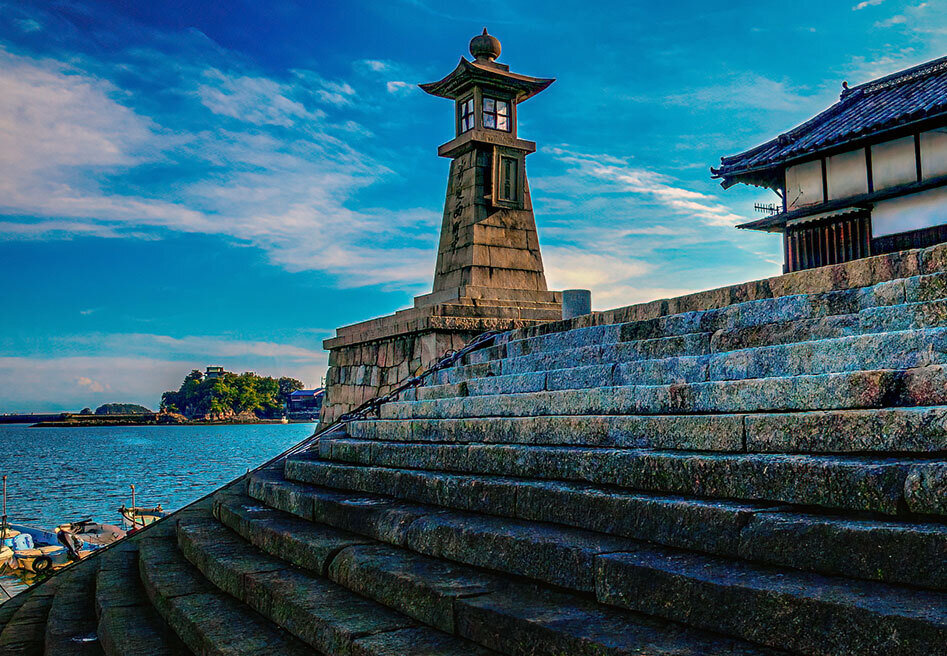
Strolling through Tomonoura, one frequently sees visitors taking commemorative photos in front of the Joyato lantern or sitting on the Gangi stone steps to gaze at the sea.
Gazing from near the lantern out toward the Gangi steps extending into the sea, images of the port during its prime--when ships docked and travelers and cargo busily crossed--naturally overlap.
The Joyato lantern guided ships through nighttime waters, while the Gangi steps allowed vessels to berth regardless of tide levels. Today, both form Tomonoura's defining scenery, yet historically both were indispensable harbor infrastructure.
Here, we trace the port town history preserved in Tomonoura, focusing on the roles of the Joyato lantern and Gangi steps.
Tomonoura Port: Welcoming Ships Through the Ages
Situated near the geographical center of the Seto Inland Sea, Tomonoura has flourished since ancient times as a port for "waiting out tides."
In the era before engine-powered vessels, ships sailed by reading tidal currents and wind directions. The waters around Tomonoura are where currents flowing from east and west collide and alter course. Mariners observed tidal shifts here, waiting for favorable conditions before heading toward their next port.
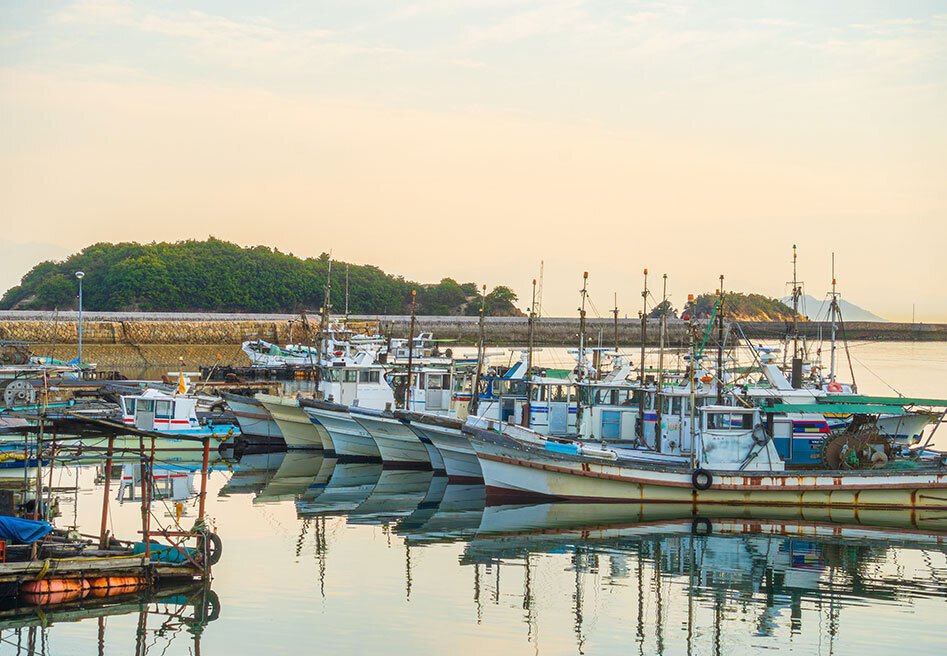 The Kitamaebune merchant ships and Joseon Envoy vessels featured in earlier editions of "Tomonoura Historical Chronicles" navigated these very Seto Inland Sea routes. As a bustling port of call, Tomo Port developed specialized infrastructure to support ship arrivals, cargo handling, and vessel maintenance.
Remnants preserved in the harbor today include the Joyato lantern, Gangi steps, Hato breakwater, Funabansho site, and Tadeba site.
Learning about these facilities reveals that Tomonoura was not merely a waiting station for ships, but a dynamic port town that grew by welcoming diverse people and commodities.
Tomonoura's Iconic Symbol: The "Joyato Lantern"
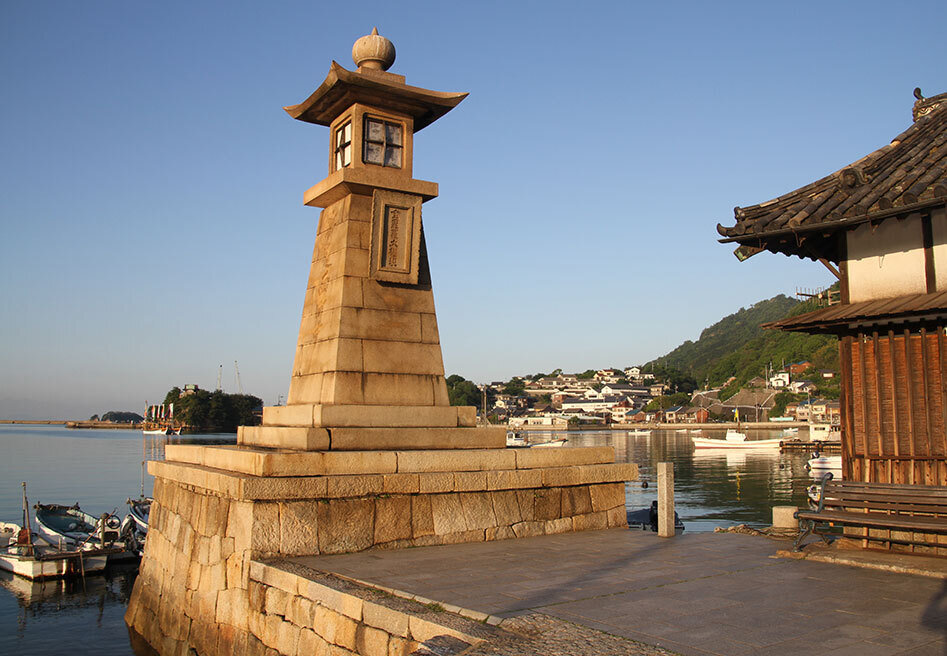 Standing on the western side of the harbor, the Joyato lantern is a symbol of Tomonoura.
The current lantern was donated by residents of Nishi-machi in 1859. Standing 12.1 meters tall from its underwater stone base to the topmost sacred jewel, it is recognized as one of Japan's largest surviving Edo-period stone lanterns.
Locally called "Turodo" (lantern tower), it functioned as a lighthouse guiding vessels entering and exiting the harbor at night.
A stone plaque inscribed with prayers for safe navigation decorates its main shaft, serving as a crucial landmark for mariners steering toward Tomo Port.
While popular today as a photo spot, viewing its majestic silhouette from the sea offers a perspective close to that of historical sailors.
Hotel Ofutei offers a special day-trip package combining a 25-minute RIB boat cruise around Tomonoura and Bentenjima Island to view the lantern from the water, alongside dining and hot spring baths.
【Scenic Views × Refreshing Cruise】 RIB Boat Tour of Tomonoura & Bentenjima from the Sea (25 Min)! Includes Tempura Course & Hot Spring Bath
After an exhilarating sea cruise, enjoy a popular tempura course meal and hot spring baths overlooking the Seto Inland Sea.
This day package lets you savor Tomonoura's maritime views, Seto Inland Sea flavors, and hot springs all in one experience.
▽Click here for package details & reservations▽
https://reserve.489ban.net/client/ofutei/0/detail/1242869
"Gangi Steps" Adapting to Rising and Falling Tides
Extending along the harbor from the base of the Joyato lantern are the stone steps known as "Gangi."
The Seto Inland Sea experiences significant tidal variation, altering water levels throughout the day.
To enable ships to dock safely at both high and low tides, stepped piers were engineered along the waterfront.
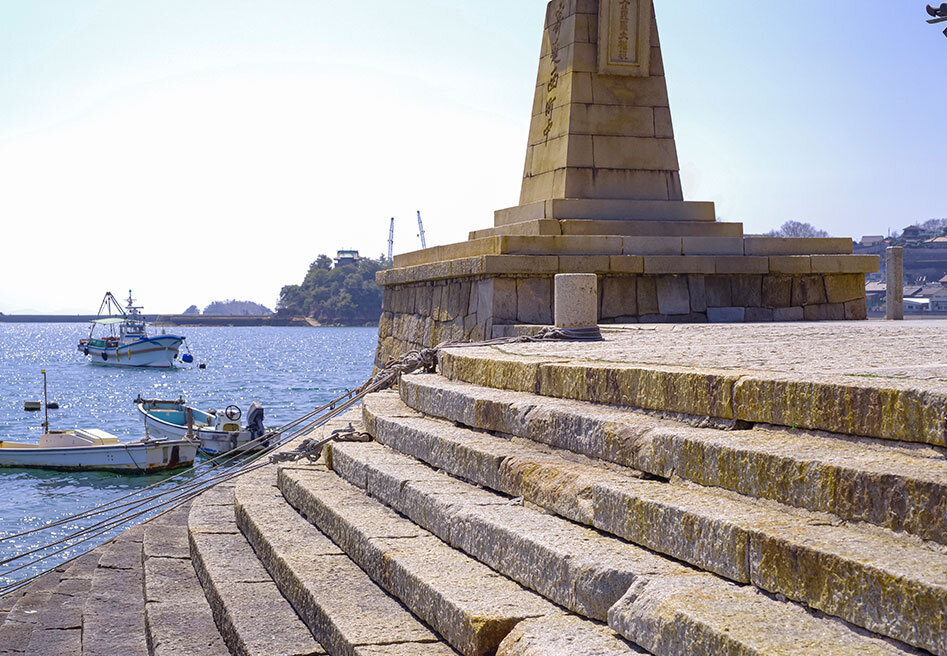 The large Gangi steps leading to the Joyato lantern were constructed in 1811. Tomo Port retains stone steps extending approximately 150 meters with up to 24 tiers.
In those days, gangplanks were laid from ships onto the Gangi steps, allowing harbor dockworkers called "Nakashi" to haul cargo ashore.
Whenever ships docked, people and goods busily crossed the steps, making Gangi essential infrastructure supporting port commerce.
Even today, near high tide most stone steps are submerged underwater, while falling tides reveal lower tiers.
The changing appearance of the steps depending on the hour reflects the functional engineering of Gangi designed specifically for shifting tides.
Stone Steps Preserving the Labor of Port Workers
The Joyato lantern guided ships, while Gangi steps connected vessels to the town.
Viewing both facilities side by side highlights Tomonoura's identity as a town that welcomed people and cargo from the sea.
During the Kitamaebune era, diverse goods such as rice, sake, salt, and kelp arrived from across Japan. Docked vessels unloaded cargo, loaded new shipments, and sailors waited in town for tides to change.
While Gangi steps today offer a peaceful spot to relax and view the ocean, historically they were bustling thoroughfares for sailors, merchants, and dockworkers. Understanding this background turns these stone steps into living scenery testifying to daily port labor.
Five Historic Port Facilities Remaining in Tomo Harbor
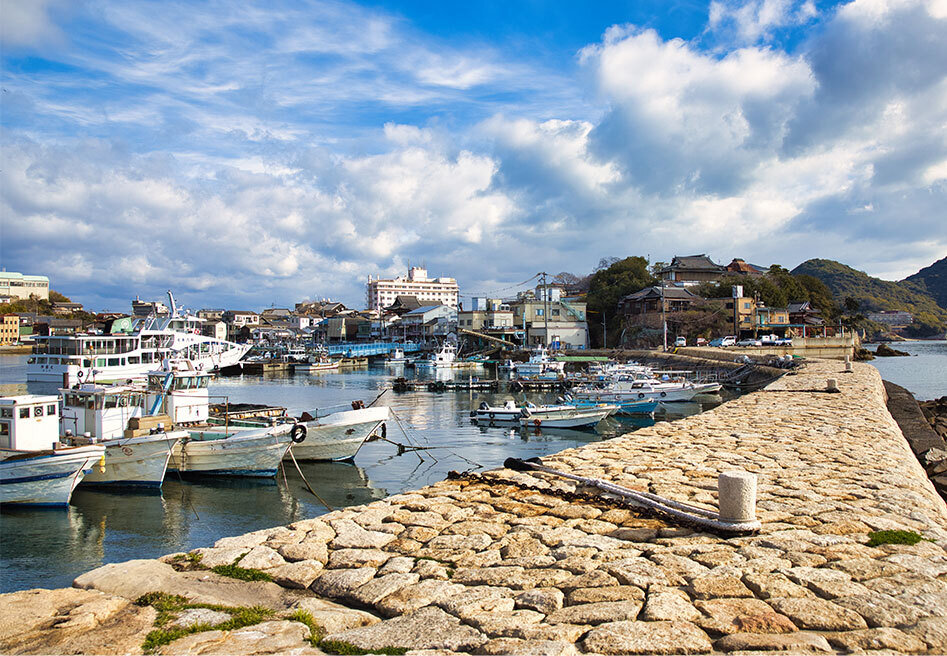 It is not only the Joyato lantern and Gangi steps that convey Tomo Port's history.
The harbor also preserves the "Hato" breakwater protecting vessels from waves, the "Funabansho" site monitoring ship traffic, and the "Tadeba" site where ship bottoms were burned to clear barnacles for maintenance.
Retaining a complete set of early-modern harbor facilities--Joyato lantern, Gangi steps, Hato breakwater, Funabansho site, and Tadeba site--is a defining characteristic of Tomonoura.
Though each fulfilled a distinct role--guiding ships, supporting cargo handling, or sheltering harbor waters--tracing them individually reveals how Tomo Port operated in unison.
After viewing the Joyato lantern, take a short stroll along the waterfront.
Walking among surviving port facilities brings the historic atmosphere of Tomonoura's prosperous tide-waiting era intimately closer.
Enjoying Tomonoura's Harbor Views at Different Hours
Checking high and low tide times before visiting the Joyato lantern and Gangi steps enhances your appreciation of shifting waterfront views.
If time permits, walking past the same spot at different hours is highly recommended.
For instance, visit the harbor during a morning town walk, then return near the Joyato lantern before heading back to the hotel.
Steps submerged earlier may now be revealed, or visible tiers may have dipped below the sea surface, offering entirely different impressions of the same location.
Observing these changes brings the reality of historical mariners navigating by tidal movements closer to heart. This approach allows you to experience Tomonoura's tide-waiting history through living harbor scenery.
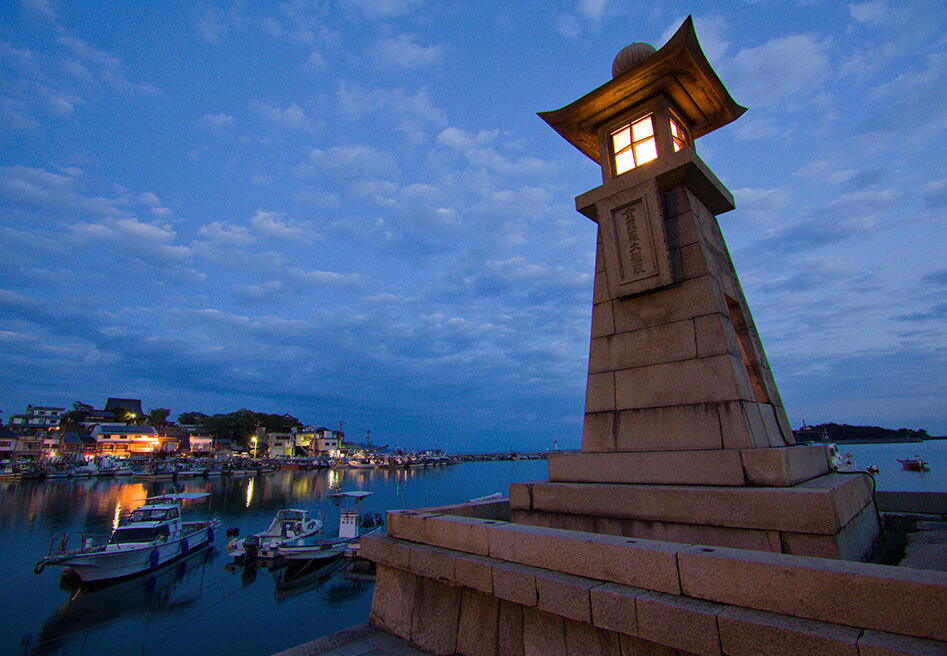 The Joyato lantern is a must-visit destination when traveling to Tomonoura.
After capturing photos, direct your eyes toward the Gangi stone steps and water levels to notice subtle changes caused by shifting tides.
Watching the harbor transform alongside tides allows you to sense the long history Tomonoura shared with the ocean.
Port Town History Alive in Everyday Life
The Joyato lantern built in 1859 and the large Gangi steps constructed in 1811.
Even after centuries, fishing vessels and ferries still navigate nearby waters, locals take daily walks, and visitors gaze out at the ocean. The natural integration of historic port facilities into modern daily life is a charm unique to Tomonoura.
Gangi steps also serve as a stage for seasonal festivals.
During the "Tomo Townscape Doll Festival," the evening event "Yoi-bina" was held for two consecutive years--the 23rd festival in 2025 and 24th in 2026--setting up doll displays directly on Gangi steps near the lantern.
At night, Hina dolls, the Joyato lantern, and surrounding townscapes are illuminated by soft lights, offering harbor scenery completely different from daytime.
Gangi steps that once connected ships to town now serve as a gathering space for seasonal celebrations, keeping historic harbor facilities actively woven into Tomonoura's living daily routines.
When visiting Hotel Ofutei, explore the Joyato lantern and Gangi steps to connect with Tomonoura's port history. After your town walk, relax at Hotel Ofutei while gazing at the Seto Inland Sea and savoring travel memories.
In our next issue of "Tomonoura Historical Chronicles," we will introduce "Numakuma Shrine," which has safeguarded the faith of Tomonoura's residents for generations.
【Reference Materials】
▷ Fukuyama City: "About Tomonoura"
▷ Fukuyama City: "Historic Port Facilities (Joyato Lantern)"
▷ Fukuyama City: "Historic Port Facilities (Gangi Steps)"
▷ Agency for Cultural Affairs Japan Heritage Portal: "A modern port town surrounded by the evening calm of Seto ~Tomonoura, where daily life melts into a sepia-toned harbor~"
The emojis on this site use Twemoji (© Twitter, Inc. and contributors). License: CC-BY 4.0