



2026.09.14
Breathtaking View from Fukuzenji Taichoro in Tomonoura | What Is "Nitto Daiichi Keisho" Praised by Joseon Envoys?
Tomonoura Historical Chronicles
Tomonoura Historical Chronicles Vol. 8
Tomonoura, which flourished as a port for waiting out tides, preserves countless stories of people who visited, departed from, and dearly cherished this town.
"Tomonoura Historical Chronicles" is a 12-part series introducing notable historical figures and events connected to Tomonoura.
Part 8 features the "Taichoro" guest hall of Fukuzenji Temple.
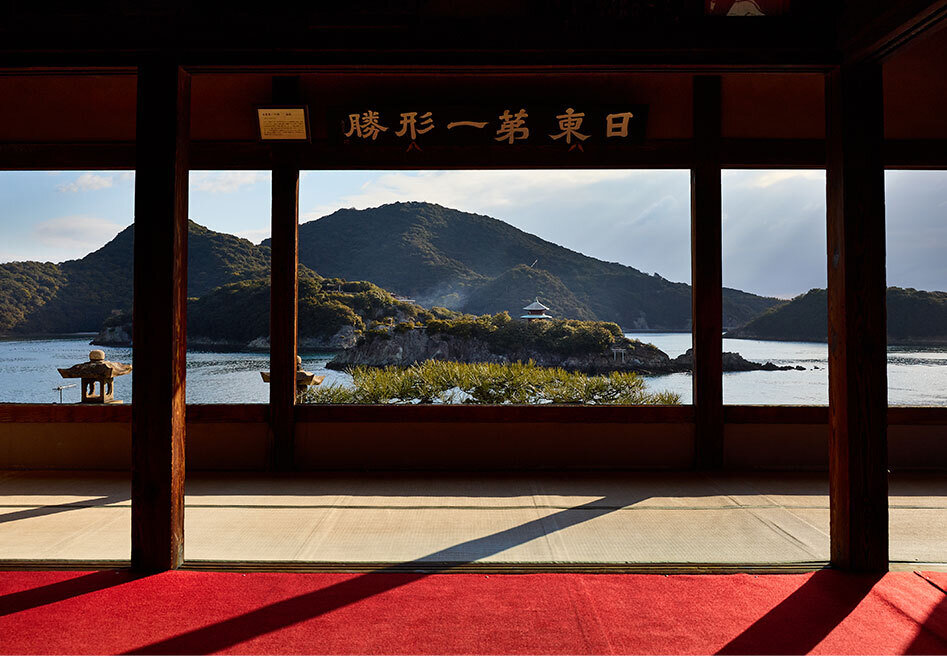
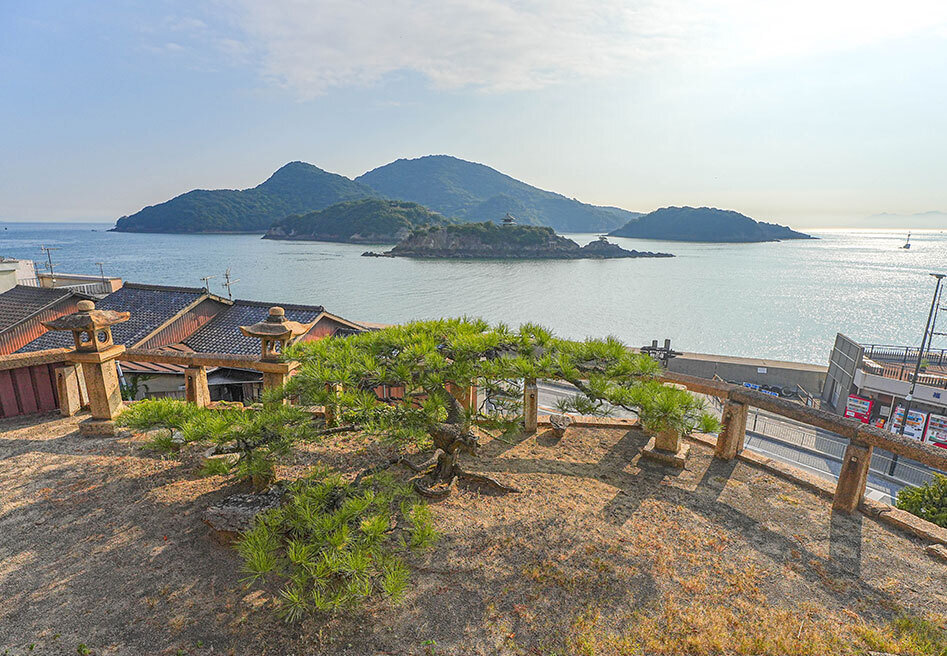
As one of Tomonoura's most iconic scenic spots, its tatami hall offers sweeping views of Bentenjima Island, Sensui Island, and the calm Seto Inland Sea stretching beyond.
We frequently recommend this location when guiding guests around Tomonoura, but Taichoro's appeal extends far beyond its breathtaking scenery.
During the Edo period, Joseon Envoys (Joseon Tongsinsa) visiting here praised the view outside the window as "Nitto Daiichi Keisho" (The Finest Scenic View in Japan).
Here, we introduce the history of Fukuzenji Taichoro, the meaning behind the phrase "Nitto Daiichi Keisho," and the captivating views of Tomonoura that have enchanted visitors for over 300 years.
Fukuzenji Taichoro Overlooking the Sea and Islands
Fukuzenji is a historic temple said to have been founded during the Tenryaku era (947-957) of the Heian period. Adjacent to its main hall, Taichoro was built as a guest hall during the Genroku era (1688-1703) of the Edo period.
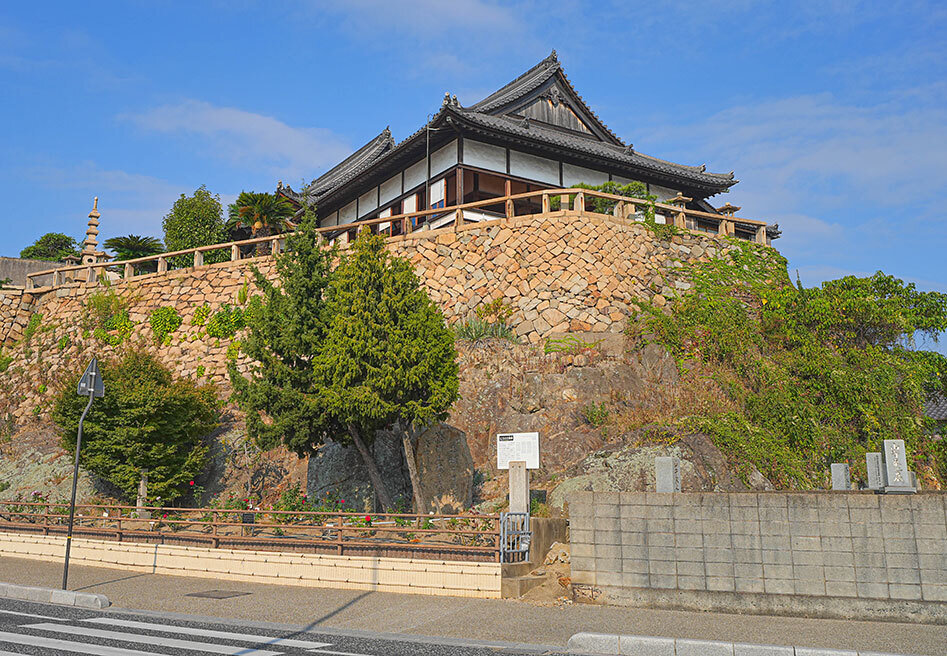 Standing atop stone walls facing the sea, stepping into Taichoro's tatami hall reveals Bentenjima Island, Sensui Island, and the tranquil Seto Inland Sea expanding before your eyes.
 Framed perfectly by large open windows, the sea and islands resemble a living landscape painting.
While Tomonoura offers many ocean view points, looking out directly at Bentenjima and Sensui Island from Taichoro's tatami room possesses a unique elegance.
Experiencing the hall firsthand clarifies why this location has captivated visitors for centuries.
The "Maritime Reception Hall" Welcoming Joseon Envoys
During the Edo period, Taichoro served as a venue for receiving the Joseon Envoys.
The Joseon Envoys were diplomatic delegations dispatched from the Korean Joseon Dynasty to Japan.
Because Tomonoura was a vital harbor along the Seto Inland Sea maritime route, delegations stopped here frequently, engaging in cultural dialogue with Japanese Confucian scholars and calligraphers at Taichoro.
Ships carrying envoys entered the harbor while townsfolk busily welcomed them.
Tracing calligraphy and poetry preserved at Taichoro reveals Tomonoura's legacy as a welcoming port for international guests arriving across the ocean.
Praised as "The Finest Scenic View in Japan"
In 1711, a delegation of Joseon Envoys visited Tomonoura.
At that time, Yi Bang-eon, an official accompanying the mission, praised the view from Taichoro by composing the phrase:
"Nitto Daiichi Keisho" (The Finest Scenic View in Japan)
"Nitto" means Japan, while "Keisho" refers to a place of superb scenic beauty. Thus, "Nitto Daiichi Keisho" represents the highest praise, meaning "The Finest Scenic View in Japan."
Having traveled across Japan during their long journey, Tomonoura's scenery left a remarkably profound impression on the envoys.
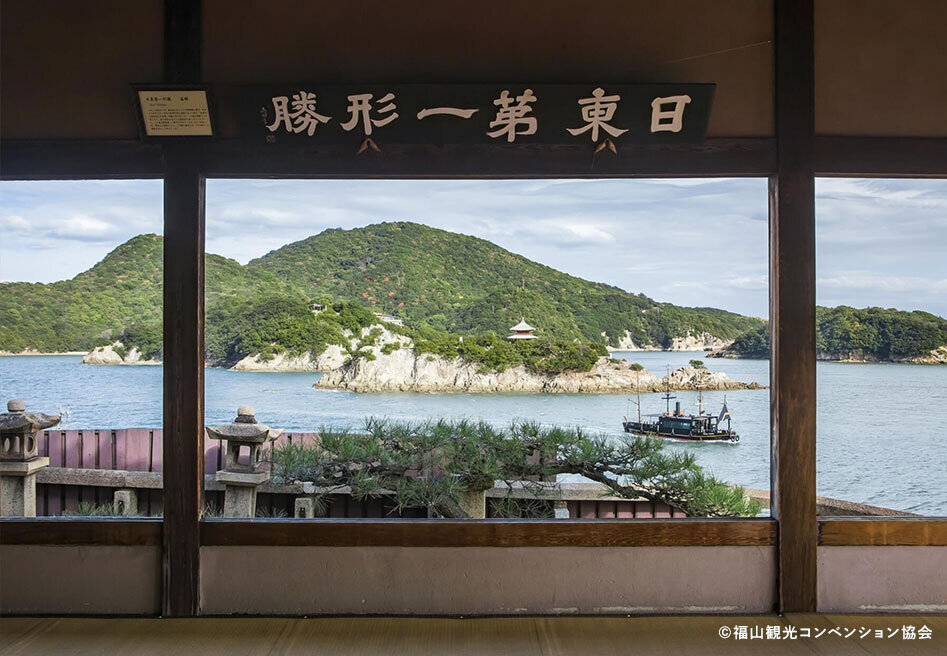
 Today, a wooden plaque inscribed with "Nitto Daiichi Keisho" hangs in Taichoro's hall.
Looking past those brushstrokes, you see Bentenjima, Sensui Island, and the Seto Inland Sea.
You can still appreciate the exact reason why it was celebrated as Japan's finest scenic spot from the very same hall.
Memories of Exchange Preserved in the Hall's Name
The name "Taichoro" itself stems from connections with the Joseon Envoys.
When envoys visited Tomo in 1748, chief envoy Hong Gye-hui named the guest hall "Taichoro," and his son Hong Gyeong-hae penned the official calligraphy for it.
Thus, not only the praise "Nitto Daiichi Keisho" but also the name "Taichoro" embodies historical ties with the Joseon Envoys.
Taichoro also displays artifacts and historical documents related to poetry and brushwork left by the envoys.
When visiting, take time to appreciate the written works and historical displays inside the hall alongside the ocean view.
A Stage for the Iroha Maru Incident in the Late Edo Period
Taichoro also holds another well-known place in history: the "Iroha Maru Incident" of 1867.
Negotiations between Sakamoto Ryoma's Kaientai and the Kishu Clan took place in Tomonoura, with Taichoro serving as one of the key meeting sites.
The hall that welcomed Joseon Envoys became the negotiation stage for Ryoma and his allies roughly 120 years later.
Touching upon both Edo-period international relations and late-Edo Bakumatsu events through a single building makes Taichoro exceptionally intriguing.
This story connects directly back to Sakamoto Ryoma and the Iroha Maru Incident featured in "Tomonoura Historical Chronicles Vol. 2."
Unchanging Views Expanding Beyond the Plaque
Upon visiting Taichoro, admire the "Nitto Daiichi Keisho" plaque in the hall before gazing out the window.
Bentenjima, Sensui Island, and vessels navigating between them offer shifting impressions depending on season and weather--from clear sunny days to misty atmospheric mornings.
Though we view this sea daily, understanding the phrase "Nitto Daiichi Keisho" renews our appreciation for the alignment of the islands and the vastness of the water.
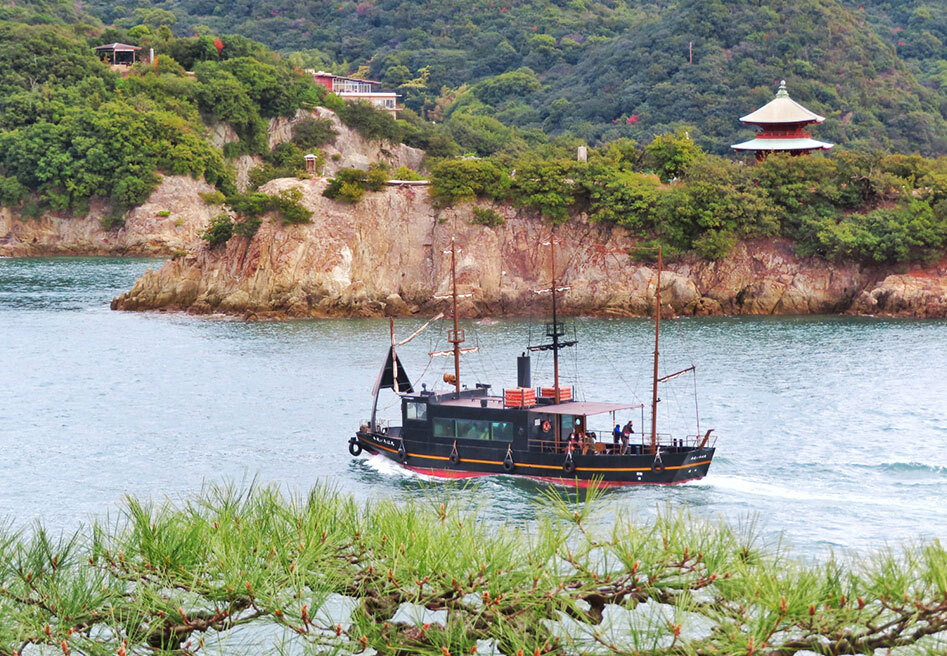 While Tomonoura is famous for its Joyato lantern and historic streetscapes, looking out over Tomonoura from Taichoro is a view to add to your travel itinerary.
Gazing out at the sea from the exact spot where international visitors were moved over 300 years ago is a wonderful way to experience this historic port town.
Making "Nitto Daiichi Keisho" a Travel Memory
When staying at Hotel Ofutei, why not add Fukuzenji Taichoro to your Tomonoura walking tour?
Standing in the hall after learning the significance of "Nitto Daiichi Keisho" overlays 300 years of living history onto the view of Bentenjima and Sensui Island.
It is a spot where you can sense a different side of Tomonoura's history open to the sea, complementing its Joyato lantern and historic streets.
After visiting Taichoro, stroll through Tomo's streets or return to the hotel to relax in hot springs. Enjoy your day in Tomonoura with plenty of time.
In our next issue of "Tomonoura Historical Chronicles," we will introduce the lives of people who supported this tide-waiting port through the "Joyato Lantern and Gangi Steps" remaining at Tomo Port.
Fukuzenji Taichoro Basic Information
An easily accessible stop during your Tomonoura stroll. Experience the history of exchange with Joseon Envoys alongside views of Bentenjima and Sensui Island from Taichoro.
- 📍 Address: 2 Tomo, Tomo-cho, Fukuyama City, Hiroshima 720-0201
- 🕘 Opening Hours: [Weekdays] 9:00 - 17:00 / [Saturdays, Sundays & Holidays] 8:00 - 17:00
- 🗓️ Days Closed: Irregular closures
- 🪙 Admission: Adults ¥300 / Junior High & High School Students ¥150 / Elementary Students ¥100
- ☎️ Phone: 084-982-2705
*Hours, fees, and closures are subject to change. Please verify the latest details before visiting.
【Reference Materials】
▷ Fukuyama City: "Fukuzenji Taichoro"
▷ Fukuyama City: "About Tomonoura"
▷ Fukuyama City: "History of Tomo-cho (Early Modern)"
▷ Fukuyama City: "Joseon Tongsinsa Related Materials"
The emojis on this site use Twemoji (© Twitter, Inc. and contributors). License: CC-BY 4.0