



2026.08.26
A Port for Waiting Out Tides Nurtured by Kitamaebune | Traces of Port Town Prosperity Remaining in Tomonoura
Tomonoura Historical Chronicles
Tomonoura Historical Chronicles Vol. 6
Tomonoura, which flourished as a port for waiting out tides, preserves countless stories of people who visited, departed from, and dearly cherished this town.
"Tomonoura Historical Chronicles" is a 12-part series introducing notable historical figures and events connected to Tomonoura.
Part 6 features "Kitamaebune" merchant ships that navigated the Sea of Japan and the Seto Inland Sea from the Edo period through the Meiji period.
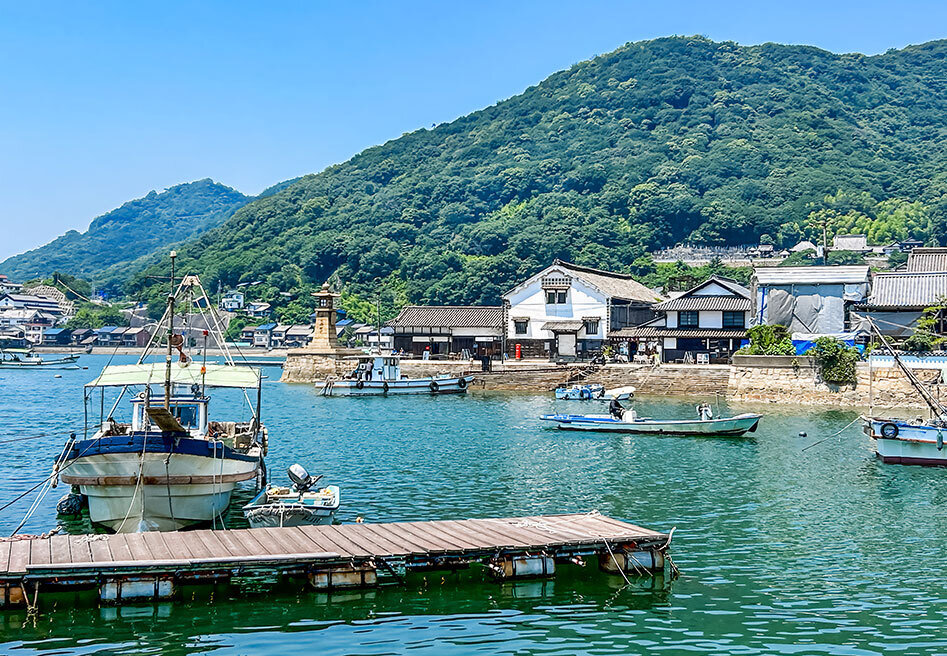
Walking through Tomonoura, one still encounters authentic port town scenery: Joyato lanterns, Gangi stone steps, and traditional townhouses.
While familiar to us, tracing each site reveals the image of a historic port town where ships, people, and goods once gathered in abundance.
Here, we introduce Tomonoura bustling with Kitamaebune ships, the reasons behind its development as a "port for waiting out tides," and the enduring maritime heritage visible today.
Why Tomonoura Became a "Port for Waiting Out Tides"
 Tomonoura is situated near the geographical center of the Seto Inland Sea.
In the era before engine-powered vessels, navigation depended entirely on winds and tidal currents.
The waters around Tomonoura are where currents flowing from the eastern and western ends of the Seto Inland Sea collide and shift.
Mariners anchored here to wait for tidal currents to change direction before sailing toward their next port.
When ships lingered in port, crew members stayed in town. They stayed at inns, dined, and purchased supplies.
As people, goods, and information gathered, Tomonoura developed into a thriving "port for waiting out tides."
"Kitamaebune" Connecting All of Japan
Indispensable to Tomonoura's prosperity were Kitamaebune merchant vessels.
From the mid-Edo period through the Meiji era, Kitamaebune were merchant ships that sailed between Osaka and Hokkaido via the Sea of Japan, buying and selling goods at various ports along their route.
The ships carried diverse regional commodities, including rice, sake, salt, kelp, and herring.
As one of the key ports of call for Kitamaebune, Tomonoura welcomed countless sailors and merchants.
With every vessel that docked, people, goods, and intelligence intermingled, making Tomonoura increasingly vibrant as a port town.
How Tomo Port Welcomed Ships
To support heavy maritime traffic, Tomonoura was equipped with comprehensive harbor infrastructure.
These historic facilities survive today: Joyato Lantern, Gangi Steps, Hato Breakwater, Funabansho Site, and Tadeba Site.
 The Joyato lantern served as a nighttime lighthouse signaling the harbor's location, while the adjacent Gangi stone steps functioned as a tidal pier where ships could berth at high or low tide.
Furthermore, the Hato breakwater protected the port from waves, the Funabansho magistrate office monitored incoming and outgoing vessels, and the Tadeba shipyard was used to burn off barnacles and maintain hull bottoms--each supporting daily port operations.
Locations we casually pass on a town walk today were once vital infrastructure welcoming vessels into Tomo Port.
Vibrancy Brought to Town by Kitamaebune
When ships gathered in port, commerce naturally developed around them.
Merchants handled cargo, inns hosted sailors, eateries served meals, and craftsmen repaired ships.
In Tomonoura, trade and brewing flourished alongside maritime shipping, lining the harbor streets with merchant townhouses.
Every incoming vessel brought new products, news, and travelers.
Tomonoura evolved from a simple waiting station for tides into a dynamic town creating diverse business opportunities.
This port activity went on to foster unique industries and culture.
Culture Born from Port Town Prosperity
 With people and goods gathering from across Japan, maritime commerce nurtured local industries and culture in Tomonoura.
A prime example is "Homeishu," a traditional medicinal liquor that remains Tomonoura's most famous specialty today.
Originating in the Edo period, it has been passed down alongside the town's port history.
Kitamaebune brought more than physical commodities.
Through interactions with visitors from various regions, food customs, traditions, and news entered the town.
Tracing preserved merchant houses and local specialties today reveals how past harbor prosperity connects directly to daily life in Tomonoura.
"Waiting Out Tides" Landscapes Remaining Today
Strolling through Tomonoura Port, remnants conveying its past as a historic port town abound.
The Gangi stone steps extending from the base of the Joyato lantern into the sea are a prime example.
 At high tide, most stone steps are submerged underwater; at low tide, submerged levels emerge into view.
That harbor scenery shifts according to daily tides remains unchanged in Tomonoura today.
Sailors docking here long ago likely watched these tidal movements, waiting for the right moment to set sail on their next voyage.
Around the port, besides the Joyato lantern and Gangi steps, the Hato breakwater, Funabansho site, and Tadeba site remain preserved.
Walking through the port after learning about Tomonoura's bustling Kitamaebune era brings new appreciation for the history of a town that prospered alongside ships.
When exploring Tomonoura, look beyond buildings and streetscapes to notice the daily rise and fall of the tide.
Harbor views subtly changing with tidal shifts are a unique pleasure of visiting Tomonoura.
A Port Town Nurtured by Time Spent Waiting for Tides
During the Kitamaebune era, countless mariners waited at Tomonoura for tides to shift.
In those waiting intervals, travelers entered town, commerce sparked, and goods and cultures from across Japan intermingled.
That "waiting time" before departure nurtured Tomonoura into a rich, flourishing port town.
Long after the era of Kitamaebune passed, that history remains inherited within the harbor and streetscapes.
Walk down to the port from Hotel Ofutei and stroll along the water while observing the ebb and flow of tides.
Even in a simple casual walk, you can feel the living heritage of Tomonoura as a prosperous "port for waiting out tides."
We invite you to enjoy these port town views from a slightly new perspective.
In our next issue of "Tomonoura Historical Chronicles," we will introduce Korean Envoys (Joseon Tongsinsa) who crossed the sea to visit Tomonoura, along with stories of international exchange preserved in this port town.
【Reference Materials】
▷ Fukuyama City: "History of Tomo-cho (Early Modern)"
▷ Fukuyama City: "History of Tomo-cho (Location & Nature)"
▷ Agency for Cultural Affairs Japan Heritage: "A modern port town surrounded by the evening calm of Seto ~Tomonoura, where daily life melts into a sepia-toned harbor~"
▷ Agency for Cultural Affairs Japan Heritage: "An Extraordinary Space Woven by the Dreams of Men Who Braved Rough Seas ~Kitamaebune Ports of Call and Shipowner Settlements~"
The emojis on this site use Twemoji (© Twitter, Inc. and contributors). License: CC-BY 4.0